5G Networks Driving Lower Latency and Enhanced Real-Time Features in Mobile Gambling Platforms
Yves Jung · Jun 15, 2026

5G Networks Driving Lower Latency and Enhanced Real-Time Features in Mobile Gambling Platforms
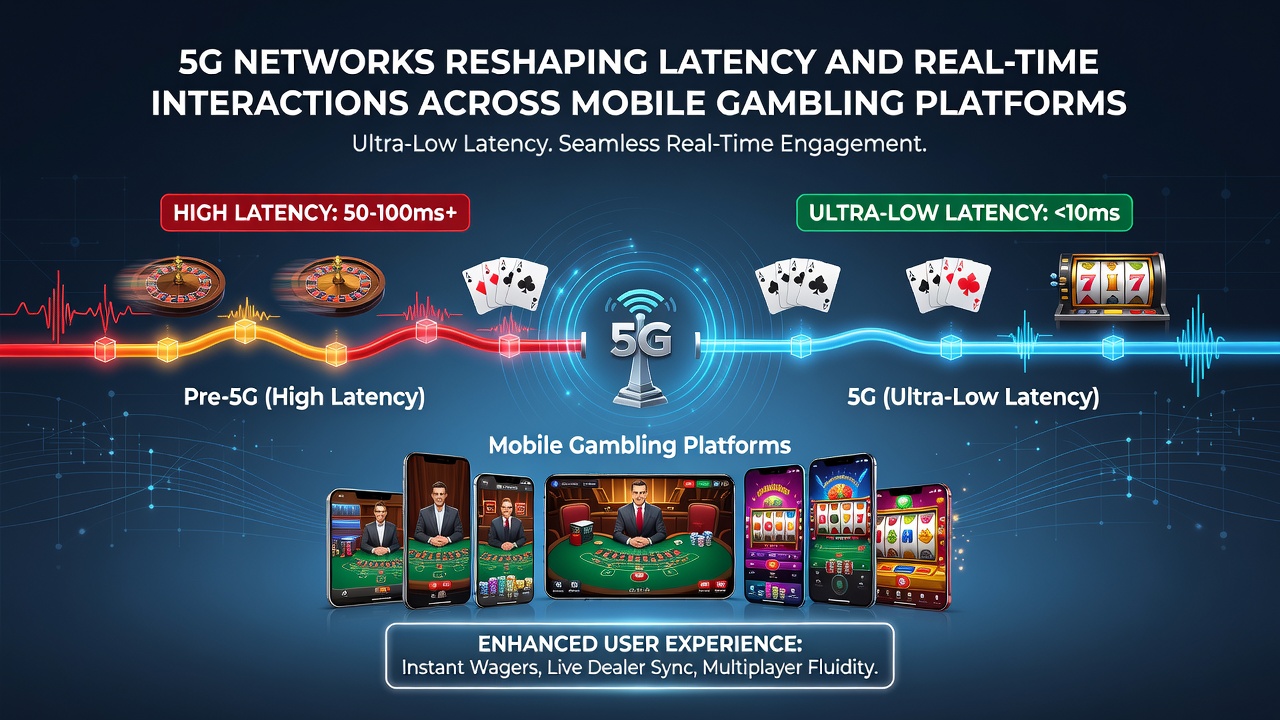
5G networks continue to reshape how mobile gambling platforms handle data transmission, with latency reductions becoming a central focus for operators seeking smoother user experiences. Data from industry deployments shows average response times dropping from 30-50 milliseconds on 4G infrastructure to under 10 milliseconds in optimized 5G environments, and this shift directly affects live dealer interactions where timing determines outcomes in games like blackjack and roulette.
Operators have observed that players using 5G connections experience fewer interruptions during high-stakes sessions, while those on older networks still encounter delays that disrupt sequences such as card reveals or wheel spins. According to reports from the Federal Communications Commission, spectrum allocations finalized in prior years enabled broader coverage that supports consistent low-latency performance across both urban centers and expanding rural zones.
Technical Shifts in Data Transmission Speeds
Network slicing capabilities within 5G architecture allow providers to allocate dedicated bandwidth segments for gaming traffic, which separates it from general consumer data flows and maintains stable connections during peak hours. Research from GSMA indicates that this segmentation reduces packet loss rates by up to 40 percent compared with shared 4G channels, creating conditions where real-time betting adjustments register almost instantaneously on user devices.
Edge computing nodes placed closer to cell towers further compress processing distances, and tests conducted through mid-2026 confirm round-trip times falling below the thresholds required for synchronized multiplayer tables. Players notice the difference most clearly in applications that stream video feeds of physical tables, where frame buffering decreases and synchronization between dealer actions and interface responses tightens.
Effects on Live Dealer and Multiplayer Formats
Live dealer platforms have incorporated 5G features to support multiple camera angles and instant chat overlays without introducing lag that previously forced operators to limit concurrent users. Figures released by the Australian Communications and Media Authority highlight increased session durations on 5G-enabled devices in regions with mature infrastructure, reflecting fewer dropouts during extended play periods.
Multiplayer formats benefit similarly because simultaneous inputs from dozens of participants process through centralized servers with reduced queuing. One deployment in European markets demonstrated that games supporting real-time side bets maintained accuracy rates above 99 percent when participants connected via 5G rather than legacy standards, and similar patterns appear in North American trials initiated before June 2026.
Integration with Device Hardware and Software
Smartphone manufacturers have aligned chipset designs with 5G modem capabilities that prioritize gaming traffic, and software updates released through 2026 include adaptive algorithms that switch between frequency bands based on signal quality. These adjustments keep latency fluctuations minimal even when users move between coverage areas during active sessions.
Application developers now embed network diagnostics that alert players when conditions might affect timing-sensitive features, allowing switches to optimized modes before issues arise. Observers note that such tools emerged from collaborative testing between carriers and platform providers, and the resulting stability supports extended play without the micro-stutters common on mixed-network environments.
Regional Deployment Patterns and Data Trends
Countries with advanced 5G rollouts report higher adoption of mobile gambling services that rely on continuous connectivity. Canadian regulatory summaries from early 2026 document growth in real-time table game participation that correlates with expanded millimeter-wave coverage in major provinces, while Australian operators cite similar patterns tied to sub-6 GHz expansions completed in the preceding year.
University-led studies on network performance have quantified improvements in packet delivery ratios that directly translate to fewer disputed outcomes in fast-paced games. These findings appear in reports from institutions tracking telecommunications infrastructure, and they emphasize how consistent low latency supports regulatory requirements for transparent transaction logging across jurisdictions.
Future Infrastructure Developments
Additional spectrum releases planned after June 2026 aim to increase capacity in high-density areas where thousands of simultaneous connections occur during major sporting events or promotional campaigns. Industry organizations project that these upgrades will extend reliable performance to emerging markets currently transitioning from 4G dominance.
Continued refinement of beamforming techniques directs signals more precisely to individual devices, reducing interference and sustaining the low-latency thresholds essential for interactive features. Data from ongoing field measurements shows progressive gains that align with operator roadmaps for feature expansions through the remainder of the decade.
Conclusion
5G infrastructure has established measurable improvements in latency metrics that support expanded real-time capabilities across mobile gambling platforms. Deployment data from multiple regions demonstrates how dedicated network features and edge processing combine to deliver consistent performance, and ongoing spectrum management efforts point toward further refinements that maintain these advantages as user volumes increase.